Thursday, August 28, 2008

Visit the breathtaking vistas of Machu Picchu


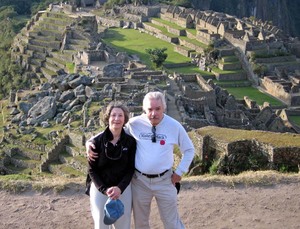
Like many other adventurers, my wife, Angela, and I had always put Machu Picchu, the ancient Inca citadel in Peru's Andes Mountains, high on our wish list of places to visit. We had had heard from friends who visited there that Machu Picchu had an almost mystical quality to it.
Still, we had no idea we would find the most spectacular mix of landscape and architecture we had ever seen, a stone settlement of temples, plazas, dwellings, steps and terraces - all of set against the natural splendor of the sheer rock walls of the Andes, rising out of the jungle.
The climax of our visit was when we hiked about four miles up from the ruins of Machu Picchu to an ancient stone structure, Intipunku, the Sun Gate, which is the front door to Machu Picchu from the Inca Trail. We felt as if we could kiss the sky. From this summit, we peered down at a breathtaking view of the crown jewel of the Inca empire.
The walls of Machu Picchu, dating back to the mid-1400s, have stood well against the forces of nature. There are several theories about the function of this fabled city. Some say it was a summer playground for the Incas; others say it was a religious retreat; and still others claim it was the last bastion against the invading Spanish conquistadores.
Whatever its purpose, Machu Picchu demonstrates that the Incas were master stonemasons. You can't help but marvel at the quality of their workmanship - stones fit together like glove to hand, and the Incas didn't have mortar.
We arrived in Machu Picchu - it's inaccessible by road - after a 3 1/2-hour train ride from Cusco, which was once the center of Inca civilization and is South America's oldest, continuously inhabited city. It acts as a kind of base camp for visitors to Machu Picchu, but it has become a popular destination in its own right.
As one of the highest cities in the world at more than 11,000 feet above sea level - or twice the altitude of Denver - Cusco takes some getting used to, especially if you arrive direct from Lima, which is at sea level.
We stayed at the Hotel Monasterio, a converted monastery dating back to the 1590s, that soothes its guests with Gregorian chants each morning and fully oxygenated rooms at night.
The locals advise visitors to drink coca tea, said to be made from the same coca leaves used to make cocaine. The natives say the tea, which has a woody, herbaceous flavor, helps prevent altitude sickness and increase energy. Coca leaves were also important to the Incas and were used for many religious ceremonies.
Wander through Cusco's cobbled streets, which branch off from the Plaza de Armas, the main square, and evidence of the Inca empire abounds. Several alleyways have original Inca stone walls and many of the buildings have been built on top of Inca foundations.
Cusco is designed in the shape of a puma, one of the mountain cats the Incas regarded as sacred. The head is high up on the hill to the north of the city's center, also the site of the ruins of Sacsayhuaman, which is pronounced "sexy woman."
Sacsayhuaman was the Inca ceremonial complex and, like Machu Picchu, it is also a wonder of stone masonry, where huge chunks of stone fit together with impeccable precision.
Cusco is also the hand-woven-textile center of Peru, so you're never far from a shop offering to dress you from head to toe in 100 percent alpaca clothing.
Our visit to Peru began in Lima, the sprawling capital of 9 million that is snarling with traffic and pollution. That being said, Lima is also a foodie mecca, generally known for its ceviche, or fresh, raw fish.
But who knew Peru gave the world the potato? It grows hundreds of varieties in more colors than you can imagine or count. I tried causa, a concoction of potato mashed in lime juice and the local indigenous pepper, aji, and filled or topped with everything from crab to avocado to octopus.
But the food wasn't the most intriguing thing we discovered in Lima. We observed that many residents, typically those in less-affluent neighborhoods, don't have roofs on their homes. This is not because it rarely rains in Lima but because some of the municipalities that make up greater Lima don't require residents living in unfinished homes to pay property taxes.
If you are planning a trip to Peru, consider going with a tour operator. We booked our trip with Abercrombie & Kent. They cater to the needs of baby-boomer clients who want an active day but a comfortable night, the best cuisine, personal escorts to and from airports and never having to worry about their bags being picked up.
We had some wonderful traveling companions, including actress' Julie Andrews' longtime lawyer (who had a cameo in her 2001 flick, "The Princess Diaries") and a Texas tycoon who's a pal of Gov. Rendell's brother.
One more reason to consider a trip to Peru is the favorable exchange rate - one of the few in the world right now. One U.S. dollar equals almost three of its Peruvian equivalent, the nuevo sol.

Peru attracting 'luxury holidaymakers'


Tourist chiefs in Peru are said to be focusing most of their campaigns towards luxury travellers who are willing to splash out while travelling in the country.Reuters says that the government of the South American destination is delighted with the influx of foreign travellers and that it now it hopes to attract those who spend more than gap year students and backpackers."It's not that we don't like backpackers ... but a lot of our campaigns are focused on luxury," Mercedes Araoz, Peru's trade and tourism minister, told the news agency.Holidaymakers they are hoping to attract to the region include those looking for spa holidays and health trips as well as eco-tourists.They are also hoping to see a rise in the number of young couples opting to get married and spent their honeymoon in the country. The tourist industry generates around $2 billion to Peru's economy which can help poor communities to prosper.Those planning on splashing out on a luxury holiday to Peru are urged to ensure they have travel insurance before they fly.

ENVIRONMENT: Amazon Increasingly Oily


LIMA, Aug 28 (Tierramérica) - More than 180 oil and natural gas fields extend across the western Amazon, shared by five South American countries and threatening biodiversity and indigenous lands, warns a study by U.S.-based organisations.Peru is the most worrisome case: 72 percent of its jungle territory overlaps with plans for exploiting fossil fuels, says the report "Oil and Gas Projects in the Western Amazon: Threats to Wilderness, Biodiversity and Indigenous Peoples", published Aug. 13 by the open-access online scientific journal PloS ONE. Blocks for oil and gas extraction cover an area of more than 688,000 square kilometres in the Amazon regions of Bolivia, Colombia, Ecuador, Peru and Brazil, and there are at least 35 transnational corporations operating them, according to the researchers, who come from Duke University in North Carolina and the non-governmental organisations Save America's Forests and Land Is Life. The concessions overlap "the most species-rich part of the Amazon for amphibians, birds and mammals", states the text. "The western Amazon is the world's most biodiverse zone, especially in amphibians," one of the co-authors, Clinton Jenkins, an ecologist at Duke University, told Tierramérica. One can find more than 600 species of trees in a single hectare, while in the entire United States there are perhaps 800 tree species, he noted. Any biologist who visits those areas will find species never before described by science but which are well known to the local indigenous inhabitants. It is very difficult to travel there, and dozens of uncontacted indigenous groups live in the area, people who are almost completely isolated from modern civilisation, Jenkins added. Peru "is the most alarming case," says the study's lead author, Matt Finer, chief ecologist at Save America's Forests. One of the biggest challenges is to keep track of the oil and gas projects that have mushroomed in this country since the research began, in 2005. In early 2005, at least 15 percent of Peru’s Amazon jungle region was affected by oil exploration and drilling, a proportion that rose to 25 percent over the course of that year and to 50 percent in 2006. So far in 2008, oil industry activity has reached the point that it affects 72 percent of Peru’s rainforest, with 64 oil fields on 49 million hectares. Fifty-six of the fields were set up in the past five years, 20 are located inside protected areas, and 17 in proposed or existing territorial preserves for protecting indigenous peoples who seek to maintain their isolation. But Peru's deputy ministry of Energy, Pedro Gamio, says that less than five percent of the land granted in concession to the companies is being exploited, and the government usually designates large blocks because the companies are making high-risk investments with a mere 10 to 15 percent probability of success. "Peru is the least explored part of the region, because of the political pendulum that has hurt us. Unlike Colombia or Brazil, our country has missed out on the opportunity to attract investment," Gamio told Tierramérica. According to the Ministry of Energy and Mining, concessions were granted for 84 fossil fuel projects by the end of 2007, 19 of which are in the process of drilling and 65 in the phase of exploration. Finer pointed out that conflicts between the oil companies and indigenous communities have grown as the number of concessions has expanded. Peru has recently seen intense protests in Amazon jungle provinces against two decrees that promote private investment in native territories. The decrees were eventually struck down by Congress. Although there are few areas where drilling has actually begun, exploration itself has impacts on the jungle, such as deforestation to build heliports and camps or to create access routes, said Finer. In fact, the main concern is the construction of roads, according to Jenkins. Once there are roads, settlers begin to arrive, the same pattern that has been seen in the jungles of Brazil, said the environmentalist, who teaches part of the year at the Nazaré Paulista Institute of Ecological Research, in the Brazilian state of São Paulo. The Ministry of Energy and Mining in Peru says there are regulations in place that require the oil companies to first utilise river and air travel, as well as already existing roads. Even for exploration, the plans should involve prior consultation with and approval by the affected indigenous communities, according to International Labour Organisation Convention 169, which Peru has ratified. "According to Convention 169, the indigenous peoples pre-date the conformation of the government and as such they should be consulted… but here the opposite occurs, undermining our consecrated rights," Alberto Pizango, president of the Interethnic Association for the Development of the Peruvian Rainforest (AIDESEP), told Tierramérica. In the opinion of deputy minister Gamio, "if we don't make an effort to find out the extent of Peru's fossil fuel potential, future generations will judge us, asking why we didn't take advantage of this opportunity when petroleum was the star in the global economy." The world's growing energy demand is a big incentive for companies based in the United States, Canada, Europe and China to search for fuel, says the report. The environmental impact studies are not sufficiently independent for them to be convincing for local communities, because they are contracted and paid for by the oil companies and usually do not take into account the interrelation of impacts. "There is no large-scale analysis of two, five, 10 or 20 lots at the same time," said Finer. Protected areas in Ecuador and Bolivia are not free of oil exploration or drilling either, as evidenced by Ecuador's Yasuní National Park and Bolivia's Madidi National Park, say the researchers. The Ecuadorian government divided nearly 65 percent of its Amazon region into petroleum blocks. The area is home to 10 indigenous groups. But in 2007, the authorities set apart a special 7,580 square km area in the Yasuní Park in order to keep its oil resources in the ground in exchange for compensation from the international community. In Brazil, the government issued 25 blocks in 2005 that surround the natural gas fields of Urucú and Jurua in the north-western state of Amazonas. The National Petroleum Agency has announced its intention to explore Acre state, also in the Amazon region. In Colombia, 35 exploration and drilling fields are located inside or near the department of Putumayo, on the border with Ecuador. The authorities opened a new round of bidding in the same area. Despite that fact, more than 90 percent of Colombia’s Amazon jungle region is free of oil industry activity, according to the study. "I drive a car, so I can't say they should ban petroleum and gas," admitted Jenkins. But, he added, the use of natural resources in the Amazon rainforest must be community-based and environmentally sustainable. (*Stephen Leahy contributed reporting from Toronto. This story was originally published by Latin American newspapers that are part of the Tierramérica network. Tierramérica is a specialised news service produced by IPS with the backing of the United Nations Development Programme, United Nations Environment Programme and the World Bank.) (END/2008)

Wednesday, August 27, 2008

Machu Picchu guide shares its lore, rituals


The remote city of Machu Picchu was abandoned after the Spanish arrived in Peru in the early 16th century, and the conquistadors never found it.
How things change.
Now, the Incan empire’s most mysterious and sacred city is visited by close to 1 million tourists a year, and increased development in the nearby tourist town of Aguas Calientes has prompted fears among conservationists and the UNESCO World Heritage Committee, which monitors such sites around the world.
So, what’s the allure of Machu Picchu? Well, our guide gave us bits and pieces of insight throughout our hike and an hours-long tour of the citadel. How much time do you have?
The mystique
Archaeologists have debated the city’s purpose for almost 100 years. Some say it was a prison, others a school. Many also believed that the nearly inaccessible town was a defensive stronghold. The consensus? Most now believe that the immense site was a sacred retreat for the ninth Incan king, Pachacutec.
Who discovered Machu Picchu is also up for debate. Hiram Bingham, an American historian and Yale professor, has long been credited with rediscovering the city in 1911. But recent claims have suggested that German businessman Augusto Berns found and looted the ruins in 1867. So, although Bingham wasn’t the first to "discover" Machu Picchu, he was the first to excavate the site and present his findings to the rest of the world. He also brought many artifacts back to the United States in 1912; Yale agreed last year to return them to Peru.
The rituals
Machu Picchu’s sacred district is home to the site’s most prized archaeological treasures, including the Temple of the Sun, the Temple of the Three Windows (no one knows its purpose) and the ritual Intihuatana Stone. Most of the Incan empire’s Intihuatana stones were destroyed by the Spanish, but Machu Picchu’s remained intact until 2000, when it was damaged by a falling crane used in the filming of a beer commercial. Don’t miss the breathtaking Temple of the Condor; the condor’s head and feathers are carved into a rock on the ground, and two mostly natural rock formations make its wings.
The construction
The Incas were incredible masons; the walls at Machu Picchu were built with finely shaped rocks that fit together perfectly. The mortarless technique used throughout the empire served them well; the buildings still stand hundreds of years later in the earthquake-prone area.
The mountain in the background
All the famous photos of Machu Picchu show a steep peak rising behind the ruins. That is Waynu Picchu, and if your legs haven’t given out you can make one more serious climb. Hikers must sign in at a checkpoint before starting; get there early because only 400 can go up each day. They don’t want your name simply to record who’s making the hike, they need to know who to look for if you don’t make it back down.
One of us on this trip is quite afraid of heights, and just getting through the last day of the Inca Trail was hard enough. The other considered going up, but was not too upset to have missed it when she heard tales of ropes, ladders and extraordinarily steep stairs from our fellow travelers.

Charity pair have mountains to climb


EXETER climbers Carl Chudley, 26, and his colleague Neville Mogford are organising a marathon mountain climb around the world.
Starting next April, they intend crossing four continents in six months.
They will start in Russia, climbing Mt Elbrus, then travel to Nepal to climb Mera, followed by Kilimanjaro in Africa and ending in Peru to climb the Machu Picchu ruins.
If they have the time in between they will look to complete further climbs en route.
The pair are looking to raise £50,000 with a minimum of £30,000 going to aid the vital work of Voluntary Service Overseas.
Carl said: "While on our treks we will visit some of the sites VSO has in Africa, Peru and Nepal.
"We are doing this as we believe the work VSO is doing is amazing and is making such a difference. At present, we are still seeking financial support from corporate sponsors but believe we will easily hit our target and exceed it.
"Our first event will be an 80 and 90s quiz night at Exeter Phoenix on September 29, 8pm to 10pm. The entrance fee is £20 per team and sponsor forms are available by emailing ."

Wednesday, August 20, 2008

oneworld to promote tourism to Peru

The world's leading quality airline alliance, oneworld®, is putting its weight behind one of the biggest yet campaigns to attract visitors to Peru.
It is linking with PromPeru, the country's national tourist organisation, to encourage people across all 150 or so countries served by the alliance's airlines to take their holidays in one of Latin America's most attractive, fascinating and welcoming countries.
It is believed to be the first time any airline alliance has worked in this way with any national tourist organization in either South or North America and follows the success of similar joint programmes last year between oneworld and the tourism organizations in Japan and Budapest.
Peru's leading airline, LAN Peru, is an affiliate member of oneworld, along with its Latin American sisters LAN Ecuador and LAN Argentina and, as a full member of the alliance, Chile's LAN Airlines. oneworld partners American Airlines and Iberia also serve Peru.
Other oneworld carriers with direct flights elsewhere in South America include British Airways and Japan Airlines, with Qantas launching services to Buenos Aires in November.
oneworld's other members - Cathay Pacific, Finnair, Japan Airlines, Malév Hungarian Airlines and Royal Jordanian and around 15 other affiliate carriers - offer excellent connections to Peru from all around the world in combination with these on-line partners.
Between them, these airlines carry 320 million on around 9,000 departures a day serving almost 700 destinations in nearly 150 countries, with the smoothest possible connections between all flights operated by all oneworld members.
oneworld is the only alliance with any airline members based in South America - and its Visit South America pass is an ideal way for travellers outside the continent to travel around Peru and the rest of the region.
LAN Peru serves 13 airports across the country. With its fellow oneworld members, it links the capital Lima non-stop with Los Angeles, Mexico City, Miami and New York in North America, with Madrid in Europe, and with around ten other gateways across South America, including Santiago, Buenos Aires, Guayaquil, Quito, Caracas and Sao Paulo.
Each oneworld airline worldwide will support the Peru drive in different ways, with the programme worldwide aimed at generating around US$1.5 million worth of exposure.
Some of them will offer special fares or frequent flyer bonus miles to Peru. Most will carry adverts or editorial coverage in their in-flight magazines, on their websites and in communications with members of their frequent flyer programmes. Others will work with tour operators or co-sponsor events or trade shows.
oneworld Vice-President Commercial Nicolas Ferri added: "Promoting travel to Peru is a great way for all the oneworld member airlines to highlight one of the alliance's most amazing and attractive home countries, our leadership as an airline alliance in Latin America and also the great value and flexibility offered by our Visit South America fare. We are delighted to be working with PromPeru in making the year ahead what will hopefully be the best yet for inbound travel to this fantastic and fascinating region."
PromPeru's Director of Tourism Promotion Mara Seminario said: "PromPeru is thrilled to work with the oneworld alliance, which connects international travellers to the world's greatest tourism destinations. Last year, Peru received a record number of visitors, after promoting the country's amazing culture, heritage, biodiversity, and cuisine throughout the world. The oneworld alliance will lead to sustained tourism growth in Peru for the years to come."The oneworld-Peru promotion is being supported by two special websites - www.oneworld.com/promo/peru is available now. PromPeru's own tourism website is available in English, French, German, Italian, Portuguese and Spanish

'Four day hike but I don't like walking'


A CLEVEDON woman will be lacing up her hiking boots and heading for the Lost City of the Incas to raise money for charity.Gail White, aged 30, of Westfield, will be trekking through Peru and Machu Picchu for four days in May in aid of the Royal National Lifeboat Institute (RNLI).The adventurer needs to raise £2,000 before she heads off to the picturesque destination and has started making and selling her own jewellery for the cause.She said: "This is going to be hard for me because I don't like walking. We're going to be hiking for six-10 hours a day for four days and part of it is 2,400m high."I've always wanted to see the fantastic country and Machu Picchu."I'm doing it in aid of the RNLI because I'm not a particularly good swimmer and they do a job I could never do. "I'm full of respect for them, they do a really good job round here."Gail has cycled from London to Paris for charity and pedalled across Poland and she is looking forward to the new challenge.